
 Planning for retirement involves setting financial goals and adjusting them over time. While everyone’s financial situation is different, general savings benchmarks can help assess progress. These retirement savings milestones provide a reference point based on income and age, offering insight into whether current savings align with long-term goals.
Retirement Savings Milestones by Age
In Your 20s: Laying the Foundation
The early working years are a time to establish good financial habits. A common guideline suggests aiming to save an amount equal to your annual salary by the time you reach 30. Contributing consistently to retirement accounts and taking advantage of employer-sponsored plans, if available, can help build this foundation.
At this stage, keeping expenses manageable and avoiding high-interest debt can also support long-term financial stability. Even small contributions can add up over time, particularly when factoring in compound growth.
In Your 30s: Building Momentum
Financial professionals often suggest having two to three times your salary saved by the time you reach 40. Balancing retirement savings with other financial responsibilities—such as homeownership, education costs, or family expenses—can be challenging, but increasing contributions over time may help maintain progress.
This decade is also a good time to reassess investment choices. Some individuals may opt for a mix of growth-oriented investments while still maintaining diversification. Additionally, tracking expenses and adjusting spending habits can help you keep your savings goals on track.
In Your 40s: Strengthening Savings
With retirement drawing closer, this decade is often a time to assess savings strategies. Many guidelines suggest having four to six times your salary saved by age 50. If savings are behind schedule, adjusting contributions and evaluating spending habits can be helpful approaches.
At this stage, it may also be beneficial to estimate retirement expenses more closely. Considering factors such as healthcare costs, potential travel, and housing can provide a clearer picture of what financial resources may be needed.
In Your 50s: Accelerating Contributions
This stage often presents an opportunity to make additional contributions. Many retirement accounts allow catch-up contributions for individuals over 50, potentially allowing for more rapid savings growth. Some financial benchmarks suggest having six to eight times your salary saved by 60.
As retirement approaches, reviewing projected Social Security benefits and potential income from other sources can help refine financial planning. Some individuals also choose to pay down remaining debts to reduce future financial burdens.
In Your 60s: Preparing for Transition
As retirement approaches, reviewing projected expenses and anticipated income sources becomes increasingly important. By retirement age, some guidelines suggest aiming for eight to ten times your salary in savings, though individual circumstances vary. Factors such as healthcare costs, housing, and lifestyle preferences play a role in determining how much is needed.
At this stage, individuals often shift their focus toward preserving savings rather than accumulating more. Adjusting investment strategies to reduce risk while aiming for a balance between growth and stability may help address long-term needs. Additionally, developing a withdrawal plan—such as the percentage of savings to withdraw annually—can help provide financial stability throughout retirement.
Factors That Can Impact Retirement Savings
Lifestyle Choices and Expenses
Spending habits significantly influence long-term savings and whether you hit your retirement savings milestones. Housing, transportation, and discretionary expenses all play a role in determining how much can be saved. Adjusting spending patterns earlier in life may create more opportunities to contribute to retirement accounts.
Healthcare Considerations
Medical expenses often rise with age. Understanding potential costs—including long-term care, Medicare, and supplemental insurance—can help with financial planning. Factoring these expenses into a retirement strategy may help avoid unexpected financial strain later on.
Economic Conditions and Market Fluctuations
Investment returns are influenced by market performance. While periods of economic downturn can impact savings, maintaining a long-term perspective and adjusting strategies as needed may help mitigate risks.
Adjusting Savings Strategies
Meeting these retirement savings milestones is not always a linear process. Life events, economic conditions, and personal circumstances influence savings progress. Reviewing contributions regularly and making adjustments based on changing needs can help maintain financial stability over time.
Regardless of the stage of life, maintaining awareness of retirement savings can support long-term planning efforts. Taking steps to adjust contributions and spending habits along the way may contribute to a more comfortable retirement.
Sources:
Recent Posts
 This Charge Doesn’t Add Up
- Scam of the Month: One Letter Away from a Scam
 Tax Diversification in Retirement: Building Flexibility for Future Income Needs
 Understanding the Difference Between Risk Tolerance, Risk Capacity, and Financial Goals
 Back-to-Routine Money Reset: Taking Stock Before the End of the Year
- Scam of the Month: This Job Won’t Work
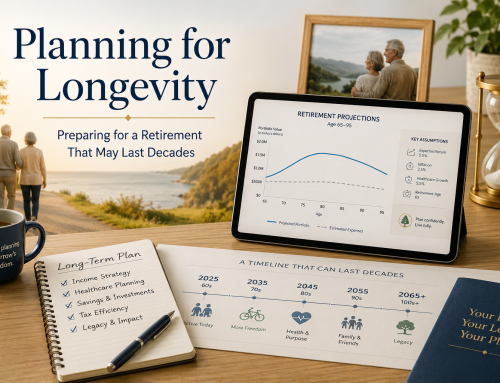
 Planning for Longevity: Preparing for a Retirement That May Last Decades
 Why Putting Your Financial Strategy in Writing Matters
 Summer Financial Checkup: Reviewing Your Progress and Priorities
- Scam of the Month: FIFA Phishing
 Four Financial Scams Targeting Seniors
- Scam of the Month: Fake It ‘Til They Take It
- How Much Do You Really Need to Retire?
 How to Prioritize Multiple Financial Goals at Once
 The Pros and Cons of Consolidating Investment Accounts







 Megan Jones joined the ILG Financial team in 2020 as marketing director. Megan and her husband live in Fredericksburg, VA with their German Short Haired Pointer, Gus. Megan is a graduate of Longwood University and holds a degree in communications. Megan is the oldest of Dave Lopez’s three children and not only enjoys working alongside her father, but also with her cousin, Chase, who joined the ILG Financial team in 2020 as an advisor. Megan is also a fully licensed Life, Health, and Annuity agent. When not at work, Megan enjoys sitting on the back porch with family and friends enjoying food and music.
 Amy Anderson joined the ILG Financial team in 2023 as the client relations coordinator. Her responsibilities include scheduling of appointments, annual check-up notifications, and annuity and required minimum distribution assistance. She is a graduate of Harding University with a degree in Computer Information Systems. Amy and her husband have two children and she enjoys reading, crocheting, music and spending time with her family.
 Terri Center joined the ILG Financial team in 2019 as client services manager. She handles client records, application processing, and gathering information to provide a professional and friendly experience with all of our clients. Terri is a graduate of Oakland University. She is married and has two children. She enjoys hiking, family time, and puzzle challenging video games. She also likes to share her creativity in her canvas paintings and sewing projects.
 Jessica Carson joined the ILG Financial team in 2018 as an agent. Jessica and her husband have four children, two dogs, 3 barn cats, 5 chickens, and three parakeets. She indeed loves her children and pets! When not at work, Jessica enjoys playing the piano and cello as well as traveling and spending time outside with her family, hiking, fishing, and boating.