

As 2025 comes to a close, now is the ideal time to reflect on your financial progress and set goals for 2026. Whether you’re focusing on saving, investing, or debt reduction, establishing a structured plan for the year ahead can lead to meaningful progress.
Assessing the Financial Landscape
Before setting financial goals for 2026, reviewing financial progress from the past year can provide valuable insights. Key questions to consider include:
- Were your income and expenses aligned with expectations?
- Did your savings goals stay on track?
- Were there unexpected financial challenges?
- How did your investments perform relative to goals?
Understanding these aspects can help create realistic and actionable financial targets for the upcoming year.
Setting Clear and Measurable Financial Goals
Using the S.M.A.R.T. (Specific, Measurable, Achievable, Relevant, Time-bound) framework can help establish financial goals that are structured and trackable. Here are some financial goal categories to consider:
1. Building or Strengthening an Emergency Fund
An emergency fund1 can provide financial flexibility during unexpected situations. A common approach is to aim for three to six months’ worth of essential expenses in an accessible savings account. If you already have a basic emergency fund, you might want to consider increasing savings to cover additional months or specific contingencies.
2. Reducing and Managing Debt
Debt management continues to be a priority for many people. Setting a goal to pay down high-interest debt, such as credit cards or personal loans, can reduce financial strain. Structured repayment strategies, such as the snowball method (paying off smaller debts first) or the avalanche method (targeting high-interest debts first), can help create an effective plan.
3. Increasing Retirement Contributions
For those with access to employer-sponsored retirement plans, such as 401(k)s, or individual retirement accounts (IRAs), adjusting contribution levels in 2026 may help build long-term savings. Taking advantage of any available employer matching contributions or considering catch-up contributions for those over age 50 can be beneficial strategies.
4. Expanding Investment Strategies
Reviewing investment portfolios and identifying opportunities to diversify2 can be a key financial goal. Whether you are exploring different asset classes, rebalancing existing portfolios, or increasing contributions to brokerage accounts, a well-rounded investment strategy can align your with long-term financial objectives.
5. Planning for Major Expenses
Setting aside funds for significant expenses, like home renovations, travel, or education costs, can reduce financial stress when those expenses arise. Creating a savings plan with a defined timeline can help manage these costs without disrupting other financial priorities.
Strategies for Staying on Track
Once financial goals are established, implementing strategies to stay on track throughout 2026 can help maintain progress.
1. Automating Savings and Investments
Setting up automatic transfers to savings accounts, retirement funds, or investment accounts can help maintain consistency. Automating contributions removes the need for manual decision-making and can help keep financial goals on schedule.
2. Regular Financial Check-Ins
Scheduling monthly or quarterly financial reviews can provide an opportunity to assess progress and make necessary adjustments. These check-ins can help identify areas where spending needs to be adjusted or where additional savings may be possible.
3. Budget Adjustments as Needed
A flexible approach to budgeting can help accommodate unexpected financial changes. Adjusting budget allocations in response to income fluctuations, inflation, or new expenses can help keep financial goals on track.
4. Utilizing Financial Tools and Resources
Budgeting apps, financial tracking software, and professional financial services can provide additional support in managing finances. These tools can help track expenses, monitor investments, and provide insights into financial health.
Looking Ahead: Financial Goals for 2026
Financial planning is an ongoing process, and setting goals for 2026 can help you create structure for the year ahead. By reflecting on past progress, setting clear objectives, and implementing strategies to maintain financial health, you can work toward your financial aspirations in a focused and disciplined manner.
Sources:
- [1] https://www.nerdwallet.com/banking/learn/emergency-fund-calculator
- [2] https://www.nerdwallet.com/taxes/learn/donor-advised-funds
Recent Posts
 This Charge Doesn’t Add Up
- Scam of the Month: One Letter Away from a Scam
 Tax Diversification in Retirement: Building Flexibility for Future Income Needs
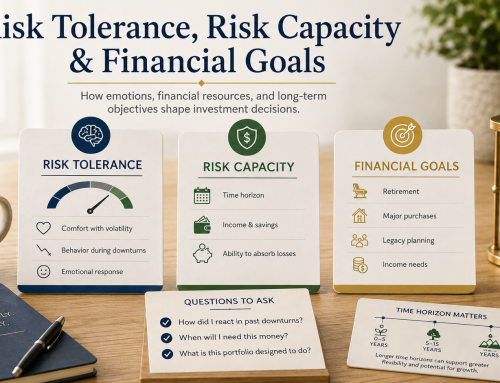
 Understanding the Difference Between Risk Tolerance, Risk Capacity, and Financial Goals
 Back-to-Routine Money Reset: Taking Stock Before the End of the Year
- Scam of the Month: This Job Won’t Work
 Planning for Longevity: Preparing for a Retirement That May Last Decades
 Why Putting Your Financial Strategy in Writing Matters
 Summer Financial Checkup: Reviewing Your Progress and Priorities
- Scam of the Month: FIFA Phishing
 Four Financial Scams Targeting Seniors
- Scam of the Month: Fake It ‘Til They Take It
- How Much Do You Really Need to Retire?
 How to Prioritize Multiple Financial Goals at Once
 The Pros and Cons of Consolidating Investment Accounts






 Megan Jones joined the ILG Financial team in 2020 as marketing director. Megan and her husband live in Fredericksburg, VA with their German Short Haired Pointer, Gus. Megan is a graduate of Longwood University and holds a degree in communications. Megan is the oldest of Dave Lopez’s three children and not only enjoys working alongside her father, but also with her cousin, Chase, who joined the ILG Financial team in 2020 as an advisor. Megan is also a fully licensed Life, Health, and Annuity agent. When not at work, Megan enjoys sitting on the back porch with family and friends enjoying food and music.
 Amy Anderson joined the ILG Financial team in 2023 as the client relations coordinator. Her responsibilities include scheduling of appointments, annual check-up notifications, and annuity and required minimum distribution assistance. She is a graduate of Harding University with a degree in Computer Information Systems. Amy and her husband have two children and she enjoys reading, crocheting, music and spending time with her family.
 Terri Center joined the ILG Financial team in 2019 as client services manager. She handles client records, application processing, and gathering information to provide a professional and friendly experience with all of our clients. Terri is a graduate of Oakland University. She is married and has two children. She enjoys hiking, family time, and puzzle challenging video games. She also likes to share her creativity in her canvas paintings and sewing projects.
 Jessica Carson joined the ILG Financial team in 2018 as an agent. Jessica and her husband have four children, two dogs, 3 barn cats, 5 chickens, and three parakeets. She indeed loves her children and pets! When not at work, Jessica enjoys playing the piano and cello as well as traveling and spending time outside with her family, hiking, fishing, and boating.