
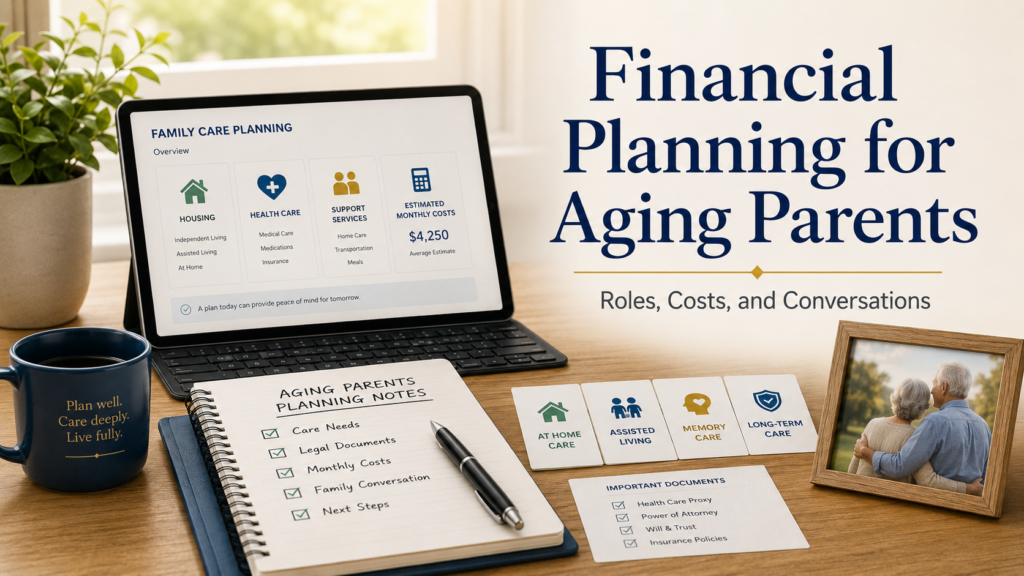
Financial planning for aging parents is something many people must consider. As parents age, adult children often find themselves taking on new responsibilities. What may begin as occasional assistance with appointments or paperwork can gradually evolve into discussions about healthcare, finances, housing, and long-term care.
These conversations are not always easy. Many families avoid them because they feel uncomfortable or believe there is still plenty of time. However, planning ahead can help families navigate future decisions with greater clarity and reduce uncertainty during stressful situations.
Start the Conversation Early
One of the most valuable steps families can take in financial planning for aging parents is initiating conversations before an urgent need arises.
Waiting until a medical event or crisis occurs can limit options and increase pressure on family members. Early discussions provide an opportunity to understand preferences, expectations, and priorities while everyone can participate fully.
Topics to discuss may include:
- Healthcare preferences
- Living arrangements
- Financial resources
- Long-term care considerations
- Estate planning1 documents
- Family caregiving expectations
These conversations do not need to happen all at once. In many cases, a series of smaller discussions can feel more comfortable and productive.
Understand Current Financial Resources
Adult children are often uncertain about their parents’ financial situation.
While privacy should be respected, having a general understanding of available resources can help support future planning. Important areas to review may include:
- Retirement income sources
- Savings and investment accounts
- Pension benefits
- Insurance coverage
- Outstanding debts
- Monthly living expenses
Knowing where key documents are located can also become important if assistance is needed later.
Plan for Healthcare Costs
Healthcare expenses often increase with age, making them a significant planning consideration.
Families may want to discuss:
- Medicare2 coverage
- Supplemental insurance policies
- Prescription medication costs
- Ongoing medical treatments
- Potential home healthcare needs
Understanding these expenses can help create more realistic expectations regarding future financial needs.
Consider Long-Term Care Possibilities
Long-term care is one of the most frequently overlooked aspects of retirement planning.
While not everyone will require extensive care, families benefit from discussing potential scenarios before they become immediate concerns.
Possible care options may include:
- Aging in place with support services
- Assistance from family members
- Home healthcare providers
- Assisted living communities
- Skilled nursing facilities
Each option involves different financial and logistical considerations.
Review Legal and Estate Planning Documents
Financial planning for aging parents might also involve legal documents. They can play an important role in helping families manage decisions if a parent becomes unable to do so independently.
Documents worth reviewing include:
- Wills
- Trusts
- Powers of attorney
- Healthcare directives
- Beneficiary designations
These documents should be updated periodically to reflect current wishes and family circumstances.
Clarify Family Roles and Responsibilities
Caregiving responsibilities often affect multiple family members.
Without clear communication, assumptions can develop regarding who will handle financial matters, medical appointments, transportation, or daily assistance.
Families may benefit from discussing:
- Who will help manage finances if necessary
- Who will assist with healthcare decisions
- How caregiving responsibilities may be shared
- What outside support may be needed
Establishing expectations early can help reduce misunderstandings later.
Evaluate the Potential Impact on Your Own Finances
Many adult children want to support aging parents while also managing their own financial goals.
Providing financial assistance, reducing work hours, or taking on caregiving responsibilities can affect retirement savings, cash flow, and other priorities.
It may be helpful to evaluate:
- How caregiving responsibilities could affect income
- Potential out-of-pocket expenses
- Available support resources
- Long-term financial implications
Balancing support for parents with your own financial objectives is an important consideration.
Create a Flexible Plan
No family can predict exactly what the future will bring.
Health needs, living arrangements, and financial circumstances may change over time. A flexible plan allows families to revisit decisions and adapt as situations evolve.
Regular conversations and periodic reviews can help keep everyone informed and aligned.
Financial Planning for Aging Parents: Final Thoughts
Planning for aging parents involves more than finances alone. It also involves communication, preparation, and thoughtful decision-making.
By discussing expectations early, understanding available resources, reviewing legal documents, and evaluating potential care needs, families can create a framework for navigating future challenges together.
While these conversations may feel difficult at first, taking a proactive approach can help families make more informed decisions and provide support when it is needed most.
Sources:
- [1] https://www.investopedia.com/terms/e/estateplanning.asp
- [2] https://www.medicare.gov/
Recent Posts
 This Charge Doesn’t Add Up
- Scam of the Month: One Letter Away from a Scam
 Tax Diversification in Retirement: Building Flexibility for Future Income Needs
 Understanding the Difference Between Risk Tolerance, Risk Capacity, and Financial Goals
 Back-to-Routine Money Reset: Taking Stock Before the End of the Year
- Scam of the Month: This Job Won’t Work
 Planning for Longevity: Preparing for a Retirement That May Last Decades
 Why Putting Your Financial Strategy in Writing Matters
 Summer Financial Checkup: Reviewing Your Progress and Priorities
- Scam of the Month: FIFA Phishing
 Four Financial Scams Targeting Seniors
- Scam of the Month: Fake It ‘Til They Take It
- How Much Do You Really Need to Retire?
 How to Prioritize Multiple Financial Goals at Once
 The Pros and Cons of Consolidating Investment Accounts

 Megan Jones joined the ILG Financial team in 2020 as marketing director. Megan and her husband live in Fredericksburg, VA with their German Short Haired Pointer, Gus. Megan is a graduate of Longwood University and holds a degree in communications. Megan is the oldest of Dave Lopez’s three children and not only enjoys working alongside her father, but also with her cousin, Chase, who joined the ILG Financial team in 2020 as an advisor. Megan is also a fully licensed Life, Health, and Annuity agent. When not at work, Megan enjoys sitting on the back porch with family and friends enjoying food and music.
 Amy Anderson joined the ILG Financial team in 2023 as the client relations coordinator. Her responsibilities include scheduling of appointments, annual check-up notifications, and annuity and required minimum distribution assistance. She is a graduate of Harding University with a degree in Computer Information Systems. Amy and her husband have two children and she enjoys reading, crocheting, music and spending time with her family.
 Terri Center joined the ILG Financial team in 2019 as client services manager. She handles client records, application processing, and gathering information to provide a professional and friendly experience with all of our clients. Terri is a graduate of Oakland University. She is married and has two children. She enjoys hiking, family time, and puzzle challenging video games. She also likes to share her creativity in her canvas paintings and sewing projects.
 Jessica Carson joined the ILG Financial team in 2018 as an agent. Jessica and her husband have four children, two dogs, 3 barn cats, 5 chickens, and three parakeets. She indeed loves her children and pets! When not at work, Jessica enjoys playing the piano and cello as well as traveling and spending time outside with her family, hiking, fishing, and boating.