
 Money conversations with your spouse are imperative when you want to achieve joint goals, and yet they don’t always come easily. Money is a very personal topic, and many people are not accustomed to discussing it. It can be downright perplexing when your spouse refuses to work on a budget with you, create financial goals and objectives, or talk about a habit that may need to be addressed. Perhaps they are actively avoiding or even refusing to discuss a specific issue, or maybe they simply fail to engage when you raise a topic. Regardless, if you want to jump-start money conversations with your spouse, it’s helpful to first begin with why they are practicing avoidance.
There’s almost always a root cause for tension about money in a relationship. A survey found that almost one-third of adults with partners reported that money is a major source of conflict in their relationships.1 Your significant other’s feelings (or fears) about money may come from a myriad of experiences that may lead them to be non-communicative. Perhaps they have experienced a past financial failure, or feel financially unskilled, or they could even be keeping a financial secret.
If talking about money usually leads to conflict between the two of you, then pause to give some thought to what the underlying issues may be. While you may not arrive at a solution right away, it’s still important to determine the ‘why’ so you can move towards having money conversations with your spouse that are useful, if not entirely harmonious. With this in mind, approach the conversation in a general manner as opposed to focusing on a specific money issue. This may give you some insight into your spouse or partner’s general feelings about money. Here are six pointers to keep the conversation productive:
- Invite your partner to have a conversation and set a time and date for it, rather than springing the topic on them.
- Use inclusive “us” language that promotes and supports the two of you as allies and teammates.
- Avoid bringing up specifics so that you are not implying blame.
- Identify some shared goals and focus on them.
- Listen carefully to your partner and don’t interrupt or correct them.
- Maintain a calm demeanor and display openness to their thoughts.
- If you believe that having this conversation will be too difficult, you might consider inviting a trusted third party to help facilitate. A financial advisor can often fill this role for a couple with multiple financial issues or planning matters to discuss.
Put the Focus on a Team Approach
Let’s dig into the second point above a bit more. It’s quite common for money conversations with your spouse to become contentious if you feel like you’re at odds, rather than on the same team. It’s also common for spouses to have different ideas and habits concerning spending and saving, organizing a budget, or using credit cards. This doesn’t mean you can’t successfully work together. It may just take a bit more effort – and more structured money conversations with your spouse – to learn how to take a team approach to accomplish your goals. It’s not just your finances that can benefit either.
As the two of you talk, make an effort not to lay blame or focus on previous mistakes or missteps. Bringing up the past or reminding them of your ongoing efforts to educate them about finances and money will most likely prove counterproductive. Bring the perspective of this being a fresh approach, where you can start anew and move forward together as a team. Talk about what might work best for the two of you, such as watching a video series or working together with a financial advisor who can help guide you toward improved financial literacy.
Initiate Solutions to Face the Challenges
You might think you’re keeping the peace by not addressing your partner’s lack of communication about money, but this is a misguided approach in the long run. It amounts to ignoring a problem that may only grow larger and be harmful as time goes on.
Though challenging at times, money conversations with your spouse are important because they help ensure that the two of you participate together in your finances. If your partner expresses that following a budget will cause them anxiety and stress, and you therefore allow them to do as they please, you are really only reinforcing their ability to remain removed from the process. However, you need a household budget, and that takes two people who are willing to work as a team to meet both of your goals and create financial security.
It may be up to you to find a solution that will bring your partner to the table. Using the household budget as an example, perhaps you can re-work and streamline the spending categories such as dining out and entertainment, and identify a single dollar amount that is their monthly discretionary spending limit. You may want to consider working from a cash budget that basically eliminates the ease of using credit and debit cards so you can only spend the cash in your wallet.2
Take Your Time with Your Approach
When you are the financially minded partner in the relationship, you might be very eager to have money conversations with your spouse. Remember to give your partner the grace to grow and become comfortable in their role. It takes patience, and it may be a slow process to build your partner’s willingness to talk about money and adopt a team mindset about household finances. There will likely be times when one or both of you will slide back into old habits and patterns. Try to be aware of these times and resist laying blame, bringing up former disputes, or shutting down altogether.
In fact, since we are all fallible, it can be helpful to be prepared for the inevitable course corrections on your journey together. A few phrases that may be helpful to use when it seems like money and marriage matters are going off-course:
- I don’t think either of us is comfortable with this situation, so let’s work together to get out of it.
- Let’s give ourselves some time to be thoughtful and write down why we’re feeling so frustrated right now.
- Let’s identify a goal that we share and are excited about and brainstorm together about how to achieve it.
It’s good to have a “reset plan” that works for both of you. Keep it handy and use it as needed so you can stay on a positive course as you manage money and marriage together.
Love and Money: Have Better Money Conversations with Your Spouse
While it can be frustrating to feel like you’re alone in the financial part of your relationship, remember that learning to talk about money with your partner is a process. Money conversations with your spouse won’t always come naturally, and they won’t always be comfortable. Persist, however, because money issues can impact many parts of your lives, and thus have a negative impact on other areas of your relationship. The tips in this article may help you gain some forward momentum in money conversations with your spouse but be sure to reach out to a financial advisor if you think you could benefit from professional guidance.
If you think you or your significant other would benefit from professional financial guidance, give us a call at (540) 720-5656.
Sources:
Recent Posts
 Buckle Up: Why Markets Could Get Bumpy This Fall
 Setting Effective Financial Goals for Sustainable Success
 Understanding Where Protected Income Strategies May Fit Within a Retirement Plan
 Charitable Giving Strategies: Planning Your Giving Before Year-End to Support Causes That Matter to You
 Taking a Proactive Approach to Important Financial Decisions Before Year-End
 This Charge Doesn’t Add Up
- Scam of the Month: One Letter Away from a Scam
 Tax Diversification in Retirement: Building Flexibility for Future Income Needs
 Understanding the Difference Between Risk Tolerance, Risk Capacity, and Financial Goals
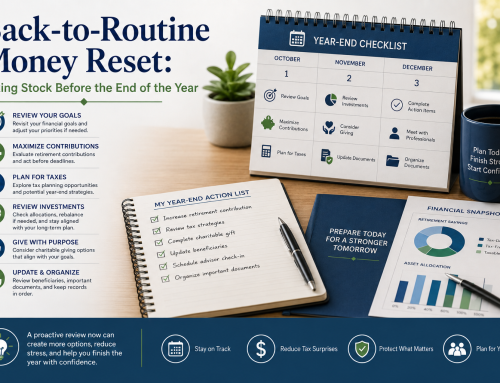
 Back-to-Routine Money Reset: Taking Stock Before the End of the Year
- Scam of the Month: This Job Won’t Work
 Planning for Longevity: Preparing for a Retirement That May Last Decades
 Why Putting Your Financial Strategy in Writing Matters
 Summer Financial Checkup: Reviewing Your Progress and Priorities
- Scam of the Month: FIFA Phishing








 Israel Chavez, Jr. joined the ILG Financial team in 2026 as a Service Advisor. A graduate of Howard University, Israel was also a Division I student-athlete, competing as a goalkeeper for the university’s soccer program. His experience balancing academics and collegiate athletics helped shape the discipline and competitive mindset he brings to his role at ILG Financial.
 Megan Jones joined the ILG Financial team in 2020 as marketing director. Megan and her husband live in Fredericksburg, VA with their German Short Haired Pointer, Gus. Megan is a graduate of Longwood University and holds a degree in communications. Megan is the oldest of Dave Lopez’s three children and not only enjoys working alongside her father, but also with her cousin, Chase, who joined the ILG Financial team in 2020 as an advisor. Megan is also a fully licensed Life, Health, and Annuity agent. When not at work, Megan enjoys sitting on the back porch with family and friends enjoying food and music.
 Amy Anderson joined the ILG Financial team in 2023 as the client relations coordinator. Her responsibilities include scheduling of appointments, annual check-up notifications, and annuity and required minimum distribution assistance. She is a graduate of Harding University with a degree in Computer Information Systems. Amy and her husband have two children and she enjoys reading, crocheting, music and spending time with her family.
 Terri Center joined the ILG Financial team in 2019 as client services manager. She handles client records, application processing, and gathering information to provide a professional and friendly experience with all of our clients. Terri is a graduate of Oakland University. She is married and has two children. She enjoys hiking, family time, and puzzle challenging video games. She also likes to share her creativity in her canvas paintings and sewing projects.
 Jessica Carson joined the ILG Financial team in 2018 as an agent. Jessica and her husband have four children, two dogs, 3 barn cats, 5 chickens, and three parakeets. She indeed loves her children and pets! When not at work, Jessica enjoys playing the piano and cello as well as traveling and spending time outside with her family, hiking, fishing, and boating.