

For decades, retirement timing meant one thing: stop working around age 65 and transition into a life of leisure. That picture has shifted considerably. Today, people are retiring earlier, later, or not in the traditional sense at all — choosing instead to phase out of work gradually or pivot into entirely different pursuits.
Understanding how retirement timing has evolved — and what factors may influence your own decision — can be a helpful starting point for a broader conversation about your future.
Why Retirement Timing Matters
The age at which you stop working can have meaningful implications for many areas of your financial life. From Social Security benefits to portfolio withdrawals, healthcare coverage to lifestyle expectations, retirement timing touches nearly every aspect of a long-term financial plan.
Thinking through these considerations early — rather than making decisions by default — may help you approach this transition with greater intention and clarity.
The “Traditional” Retirement Age and Where It Came From
The idea of retiring at 65 has deep roots in American policy and culture. When Social Security1 was established in the 1930s, 65 became the standard age for receiving full benefits. Over time, that number became a cultural touchstone — the default finish line for a working career.
Today, the full retirement age for Social Security has shifted for many people, ranging from 66 to 67 depending on the year you were born. This is one reason why the notion of a single “right” age for retirement is worth reexamining.
Retiring Earlier Than 65
Some people find themselves in a position to retire before the traditional age — whether due to financial circumstances, health considerations, or a desire for a different pace of life.
Leaving the workforce early can come with financial trade-offs worth exploring, such as:
- A longer period for retirement assets to support living expenses
- Potential gaps in healthcare coverage before Medicare2 eligibility at 65
- Reduced Social Security benefits if claimed before your full retirement age
These are not reasons to avoid early retirement, but they are factors that may benefit from careful planning.
Retiring Later Than 65
Conversely, many people are choosing to work longer — and finding real value in doing so. Continued employment can provide income, social connection, and a sense of purpose that some find difficult to replicate in full retirement.
From a financial standpoint, working additional years may allow for continued contributions to retirement accounts, a delay in portfolio withdrawals, and an increase in eventual Social Security benefits if you defer claiming.
Whether by choice or necessity, retiring later than anticipated is a path that many individuals are navigating thoughtfully.
The Rise of Phased and Non-Traditional Retirement
A growing number of people are moving away from the on/off switch model of retirement entirely. Phased retirement — reducing work hours gradually over time — has become a more common and accepted path. Others are transitioning into consulting, part-time work, or passion projects that generate some income while offering greater flexibility.
These approaches can offer a middle ground: maintaining some financial productivity while beginning to enjoy the freedoms that retirement is often associated with. For some, this kind of gradual transition also supports emotional well-being by providing structure and purpose during a significant life change.
Questions Worth Considering About Your Retirement Timing
There is no single answer to when you should retire. The right timing depends on a range of personal and financial factors. As you think about your own situation, some questions that may be worth reflecting on include:
- What does a meaningful and sustainable retirement look like for you?
- How does your current financial position align with your anticipated retirement expenses?
- What role, if any, do you want work to play in your later years?
- How do healthcare needs factor into your timeline?
These questions do not have easy answers, but exploring them with a financial professional can help you build a plan that reflects your actual goals — not just a default assumption about when retirement is supposed to happen.
Retirement Timing: Final Thoughts
The concept of retirement is more flexible than it once was, and that flexibility can work in your favor. Whether you are considering an early exit, planning to work well past 65, or exploring a gradual transition, thoughtful retirement timing may support a more confident and sustainable path forward.
Talking with a financial professional who understands your full picture is a meaningful first step toward making retirement decisions that are right for you — not just right for everyone.
Sources:
- [1] https://www.ssa.gov/
- [2] https://www.medicare.gov/
Recent Posts
 Buckle Up: Why Markets Could Get Bumpy This Fall
 Setting Effective Financial Goals for Sustainable Success
 Understanding Where Protected Income Strategies May Fit Within a Retirement Plan
 Charitable Giving Strategies: Planning Your Giving Before Year-End to Support Causes That Matter to You
 Taking a Proactive Approach to Important Financial Decisions Before Year-End
 This Charge Doesn’t Add Up
- Scam of the Month: One Letter Away from a Scam
 Tax Diversification in Retirement: Building Flexibility for Future Income Needs
 Understanding the Difference Between Risk Tolerance, Risk Capacity, and Financial Goals
 Back-to-Routine Money Reset: Taking Stock Before the End of the Year
- Scam of the Month: This Job Won’t Work
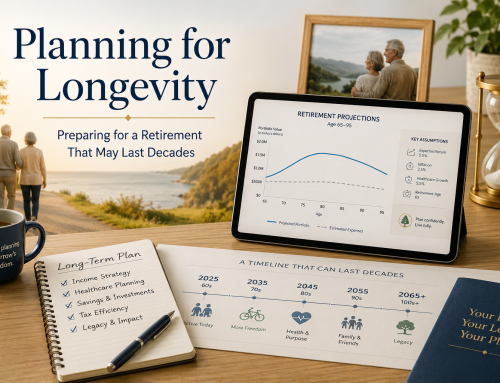
 Planning for Longevity: Preparing for a Retirement That May Last Decades
 Why Putting Your Financial Strategy in Writing Matters
 Summer Financial Checkup: Reviewing Your Progress and Priorities
- Scam of the Month: FIFA Phishing






 Israel Chavez, Jr. joined the ILG Financial team in 2026 as a Service Advisor. A graduate of Howard University, Israel was also a Division I student-athlete, competing as a goalkeeper for the university’s soccer program. His experience balancing academics and collegiate athletics helped shape the discipline and competitive mindset he brings to his role at ILG Financial.
 Megan Jones joined the ILG Financial team in 2020 as marketing director. Megan and her husband live in Fredericksburg, VA with their German Short Haired Pointer, Gus. Megan is a graduate of Longwood University and holds a degree in communications. Megan is the oldest of Dave Lopez’s three children and not only enjoys working alongside her father, but also with her cousin, Chase, who joined the ILG Financial team in 2020 as an advisor. Megan is also a fully licensed Life, Health, and Annuity agent. When not at work, Megan enjoys sitting on the back porch with family and friends enjoying food and music.
 Amy Anderson joined the ILG Financial team in 2023 as the client relations coordinator. Her responsibilities include scheduling of appointments, annual check-up notifications, and annuity and required minimum distribution assistance. She is a graduate of Harding University with a degree in Computer Information Systems. Amy and her husband have two children and she enjoys reading, crocheting, music and spending time with her family.
 Terri Center joined the ILG Financial team in 2019 as client services manager. She handles client records, application processing, and gathering information to provide a professional and friendly experience with all of our clients. Terri is a graduate of Oakland University. She is married and has two children. She enjoys hiking, family time, and puzzle challenging video games. She also likes to share her creativity in her canvas paintings and sewing projects.
 Jessica Carson joined the ILG Financial team in 2018 as an agent. Jessica and her husband have four children, two dogs, 3 barn cats, 5 chickens, and three parakeets. She indeed loves her children and pets! When not at work, Jessica enjoys playing the piano and cello as well as traveling and spending time outside with her family, hiking, fishing, and boating.